
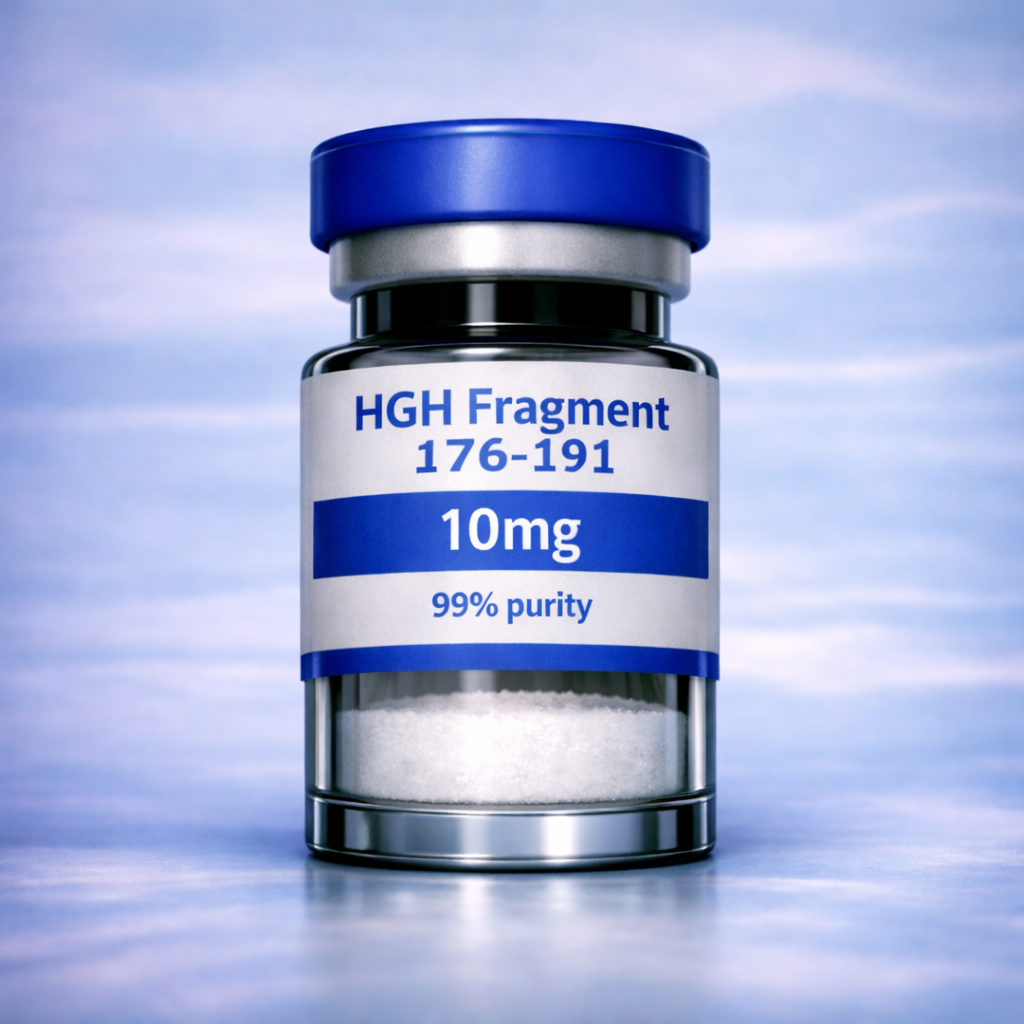

HGH Fragment 176‑191 – Fat Metabolism Peptide for Body Composition Research
What Is HGH Fragment 176‑191?
HGH Fragment 176‑191 is a synthetic peptide derived from the C‑terminal end of human growth hormone (HGH). Specifically, it represents a modified fragment consisting of amino acids 176 through 191 of the natural growth hormone molecule.
Researchers became interested in this fragment because studies suggested that the fat‑burning (lipolytic) properties of growth hormone were concentrated in this specific region of the hormone molecule. HGH Fragment 176‑191 was therefore developed to isolate these metabolic effects without the broader systemic effects associated with full growth hormone.
As a result, this peptide has become widely studied in metabolic, obesity, and body composition research, particularly in investigations focusing on fat metabolism and adipose tissue regulation.
How HGH Fragment 176‑191 Works
HGH Fragment 176‑191 primarily interacts with fat metabolism pathways rather than the broader hormonal pathways triggered by full growth hormone.
Its mechanisms of action studied in research settings include:
1. Stimulation of Lipolysis
The peptide may help stimulate lipolysis, the biological process in which stored fat (triglycerides) is broken down into fatty acids and glycerol.
This process allows fat stored in adipose tissue to be used as energy by the body.
2. Inhibition of Lipogenesis
HGH Fragment 176‑191 has also been studied for its ability to reduce lipogenesis, the process by which the body forms and stores new fat.
By limiting fat storage while encouraging fat breakdown, the peptide may influence overall fat metabolism balance.
3. Targeted Action on Adipose Tissue
Unlike full growth hormone, which affects multiple tissues and endocrine pathways, HGH Fragment 176‑191 appears to act more selectively on fat cells.
This targeted activity is why researchers study it specifically for body composition and metabolic regulation.
4. Minimal Growth Hormone–Like Effects
Another reason HGH Fragment 176‑191 has gained research interest is that it does not appear to significantly affect blood glucose levels, insulin sensitivity, or IGF‑1 production in the same way that full HGH does.
This allows scientists to isolate fat metabolism pathways in experimental models.
Key Research Benefits of HGH Fragment 176‑191
Research involving HGH Fragment 176‑191 has focused on several potential metabolic outcomes.
Supports Fat Metabolism Research
The peptide is frequently used in studies exploring how fat is mobilized and utilized in the body.
Investigating Body Composition Regulation
Researchers studying fat reduction and adipose tissue biology often examine this peptide due to its targeted lipolytic activity.
Focused Metabolic Mechanism
Because it isolates a specific functional region of the growth hormone molecule, HGH Fragment 176‑191 allows scientists to study fat metabolism pathways without broader endocrine effects.
Potential Applications in Obesity Research
Laboratory models studying obesity and metabolic disorders may use this peptide to investigate mechanisms of fat accumulation and energy utilization.
Controlled Experimental Dosing
Peptide formats used in research allow precise measurement and dosing for controlled metabolic studies.
Areas of Scientific Interest
Researchers studying HGH Fragment 176‑191 often focus on several areas of metabolic and physiological research:
-
Fat metabolism pathways
-
Lipolysis and adipose tissue biology
-
Obesity and metabolic syndrome research
-
Body composition regulation
-
Energy metabolism and fat oxidation
These areas make HGH Fragment 176‑191 a useful compound for laboratories studying fat metabolism at the molecular level.
Handling and Storage in Research Settings
To maintain stability and reliability in laboratory environments, peptides such as HGH Fragment 176‑191 are typically handled under controlled conditions.
Common storage recommendations include:
-
Refrigeration or freezing according to supplier guidelines
-
Protection from excessive heat or light
-
Use of sterile handling techniques during preparation
Proper storage helps preserve peptide integrity for consistent experimental results.
Safety Notice
HGH Fragment 176‑191 is generally supplied as a research compound.
Important notes include:
-
Intended for laboratory research use only
-
Not approved for human or veterinary consumption
-
Should only be handled by qualified research professionals
-
Must be used according to laboratory safety regulations
Summary
HGH Fragment 176‑191 is a specialized synthetic peptide derived from the fat‑metabolism region of the human growth hormone molecule. It has gained attention in metabolic research because it appears to isolate the lipolytic (fat‑breaking) effects of growth hormone without many of the hormone’s broader endocrine activities.
By stimulating fat breakdown while reducing fat storage, the peptide provides researchers with a valuable tool for studying fat metabolism, adipose tissue biology, and body composition regulation.
For laboratories investigating obesity, energy metabolism, and metabolic health pathways, HGH Fragment 176‑191 remains an important compound for advancing scientific understanding of fat regulation mechanisms.


Reviews
There are no reviews yet.