


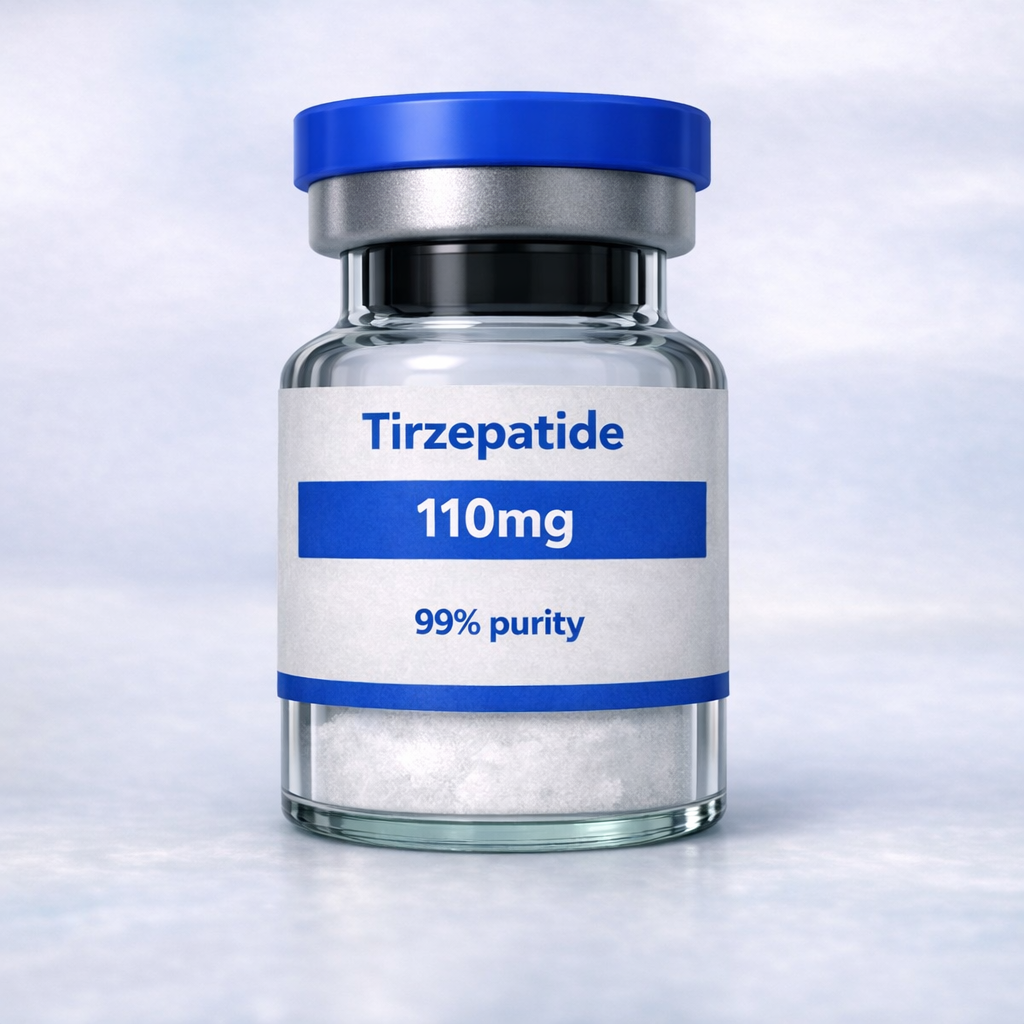

Tirzepatide 110mg: Separating Fact from Fiction in Dosing Safety
The rise of Tirzepatide as a leading treatment for type 2 diabetes and obesity has generated tremendous interest among patients and healthcare professionals alike. With this growing popularity comes a flood of information—some accurate, some misleading, and some potentially dangerous. Among the more puzzling claims circulating online is the concept of Tirzepatide 110mg. This comprehensive guide aims to clarify the facts about Tirzepatide dosing, explain why 110mg is not a legitimate dose, and provide essential safety information for anyone considering or currently using this medication.
What Is Tirzepatide 110mg and How Does It Work?
Tirzepatide is a once-weekly injectable medication that represents a significant advance in metabolic medicine. It belongs to a class known as dual GIP and GLP-1 receptor agonists. In simpler terms, it mimics two natural hormones in the body that work together to regulate blood sugar and appetite.
The first hormone, GIP or glucose-dependent insulinotropic polypeptide, helps the pancreas release insulin when blood sugar levels rise. The second hormone, GLP-1 or glucagon-like peptide-1, slows down digestion, signals fullness to the brain, and further enhances insulin production. By activating both pathways simultaneously, Tirzepatide provides more powerful blood sugar control and weight loss than medications that target only one of these hormones.
Tirzepatide is FDA-approved under two brand names. Mounjaro® is approved for treating type 2 diabetes, while Zepbound® is approved for chronic weight management in adults with obesity or overweight with at least one weight-related condition. Since its initial approval, millions of prescriptions have been written, and clinical studies have consistently demonstrated its superiority over older medications like semaglutide.
The Approved Dosing Range of Tirzepatide 110mg.
Understanding the official dosing guidelines is critical for patient safety. According to the FDA-approved prescribing information, Tirzepatide is available in three maintenance doses: 5mg, 10mg, and 15mg. These doses are administered as a single subcutaneous injection once weekly, meaning one injection per week using a prefilled pen device.
The standard treatment protocol begins with a four-week initiation phase at 2.5mg once weekly. This starting dose is not intended to provide therapeutic benefit. Instead, it allows the body to gradually adjust to the medication, minimizing common side effects like nausea, vomiting, and diarrhea. After completing four weeks at 2.5mg, patients typically increase to 5mg once weekly.
If additional blood sugar control or weight loss is needed after at least four weeks on 5mg, the dose may be increased to 10mg once weekly. Similarly, if further improvement is required after another four weeks on 10mg, the dose may be increased to the maximum approved strength of 15mg once weekly. Some patients achieve their treatment goals at 5mg or 10mg and never require the 15mg dose.
Clinical trials have shown impressive results at these approved doses. At 10mg, patients achieved approximately 19 percent total body weight loss on average. At 15mg, weight loss reached approximately 21 percent. HbA1c reductions for patients with type 2 diabetes ranged from 1.8 to 2.5 percentage points depending on the dose and study population.
Is Tirzepatide 110mg a Real Dose?
The straightforward answer is no. Tirzepatide 110mg does not exist as an approved, clinically studied, or safe dose for any medical indication whatsoever. There are multiple compelling reasons why this dose is not part of legitimate medical practice.
First, the maximum dose ever studied in clinical trials is 15mg. The SURPASS trials for type 2 diabetes and the SURMOUNT trials for obesity tested doses of 5mg, 10mg, and 15mg only. No pharmaceutical company or research institution has conducted safety or efficacy trials for Tirzepatide at doses exceeding 15mg. A 110mg dose would be more than seven times higher than the maximum approved strength.
Second, the pharmacokinetics of Tirzepatide make a 110mg dose biologically implausible. The medication has a half-life of approximately five days, meaning it remains active in the body for an extended period. A 110mg dose would produce blood levels far beyond any therapeutic window, leading to toxic effects. The body simply cannot safely process such a massive quantity of this medication.
Third, the side effects of a 110mg dose would almost certainly be life-threatening. Even at the approved 15mg dose, many patients experience nausea, vomiting, diarrhea, and abdominal discomfort as their bodies adjust. At 110mg, these effects would be magnified exponentially. Patients would likely experience uncontrollable vomiting leading to severe dehydration, acute pancreatitis requiring hospitalization, gastroparesis or stomach paralysis, dangerously low blood sugar levels especially in combination with other diabetes medications, and potential kidney failure from dehydration.
No responsible healthcare provider would prescribe such a dose, and no legitimate pharmacy would dispense it.
Where Does the Tirzepatide 110mg Misinformation Come From?
If 110mg is not a real Tirzepatide dose, why might someone encounter this number in their research or conversations? Several plausible explanations exist.
One common source of confusion is Orlistat 120mg, a completely different weight loss medication. Orlistat is an oral capsule taken three times daily with meals. It works by inhibiting dietary fat absorption in the intestines, not through GIP or GLP-1 pathways. Someone researching weight loss drugs might see the numbers 110mg or 120mg associated with Orlistat and incorrectly attribute them to Tirzepatide.
Another possibility is typographical error or decimal misplacement. A reference to 11.0mg could easily be misread or mistyped as 110mg. Alternatively, someone might mistakenly convert micrograms to milligrams, though Tirzepatide is dosed entirely in milligrams.
Misinformation on social media and unverified websites is also a significant factor. Unregulated online forums, counterfeit medication sellers, and poorly researched blog posts can spread incorrect dosing information. Some sources may intentionally promote non-standard doses to sell unregulated compounded products.
Additionally, Tirzepatide is sometimes confused with Retatrutide, an investigational triple agonist currently in clinical trials. Retatrutide has its own distinct dosing protocol that does not include 110mg. Cross-referencing between different pipeline drugs can lead to factual errors.
The Dangers of Unapproved Tirzepatide Doses
Patients should never attempt to use Tirzepatide at any dose exceeding 15mg. Equally important, patients should never obtain Tirzepatide from unregulated sources claiming to offer special or custom strengths like 110mg. The risks of using unapproved doses include severe gastrointestinal distress requiring emergency medical care, acute pancreatitis which can cause permanent damage to the pancreas, gallbladder disease including cholecystitis and gallstones, severe hypoglycemia potentially leading to loss of consciousness, acute kidney injury from dehydration, gastroparesis or delayed stomach emptying that may persist even after stopping the medication, and death in extreme cases of overdose.
Compounded versions of Tirzepatide, when legally available, should be obtained only from state-licensed pharmacies and used exactly as prescribed. No legitimate compounding pharmacy would produce a 110mg dose because such a strength has no medical basis.
Correct Dosing Protocol for Tirzepatide
For patients prescribed Tirzepatide, following the approved dosing protocol is essential for both safety and therapeutic success. The standard titration schedule proceeds as follows.
Weeks one through four: 2.5mg once weekly. This is an initiation dose only.
Weeks five through eight: 5mg once weekly. This is the first therapeutic maintenance dose.
Weeks nine through twelve and beyond: If needed after at least four weeks on 5mg, increase to 10mg once weekly.
Thereafter: If needed after at least four weeks on 10mg, increase to the maximum approved dose of 15mg once weekly.
Each dose is administered as a subcutaneous injection using the prefilled pen device. Injection sites should be rotated among the abdomen, thigh, or upper arm. The medication requires refrigeration until first use, after which it may be kept at room temperature for up to 21 days depending on the brand.
Patients who miss a dose should take it as soon as possible if four days or less have passed. If five days or more have passed, they should skip the missed dose and take the next dose on the regular schedule. Never take two doses at once.
Frequently Asked Questions
Q: Is there any clinical trial testing Tirzepatide 110mg?
No. No clinical trial has ever tested or will test Tirzepatide at 110mg. All current and completed trials use doses within the 2.5mg to 15mg range.
Q: Could 110mg refer to a cumulative monthly dose?
No. Tirzepatide is always dosed as a weekly injection. Even a cumulative monthly dose of 110mg would average 27.5mg per week, which still exceeds the maximum 15mg weekly dose.
Q: What should I do if I see Tirzepatide 110mg advertised online?
Avoid it completely. This is almost certainly a counterfeit, mislabeled, or intentionally dangerous product. Legitimate Tirzepatide is prescription-only and available only through licensed pharmacies.
Q: I have severe obesity and standard doses aren’t working. Would a higher dose help?
If standard doses up to 15mg are not producing desired results after adequate time, speak with your doctor. Options might include switching to a different medication, adding complementary therapies, or evaluating other factors affecting your weight loss. Self-escalating to dangerous doses is never the answer.
Q: Is 110mg a typo for 11.0mg?
Possibly. Some compounded or research formulations might be labeled in ways that cause confusion. However, even 11.0mg is not a standard dose. The approved doses are 5mg, 10mg, and 15mg.
Product Highlights
- ✔ 110mg peptide concentration
- ✔ Dual-action (GIP + GLP-1 receptor agonist)
- ✔ High-quality, reliable formulation
- ✔ Designed for advanced weight management support
Important Note
For best results, combine with a balanced diet and regular exercise. Responsible use and professional guidance are recommended.


Reviews
There are no reviews yet.