


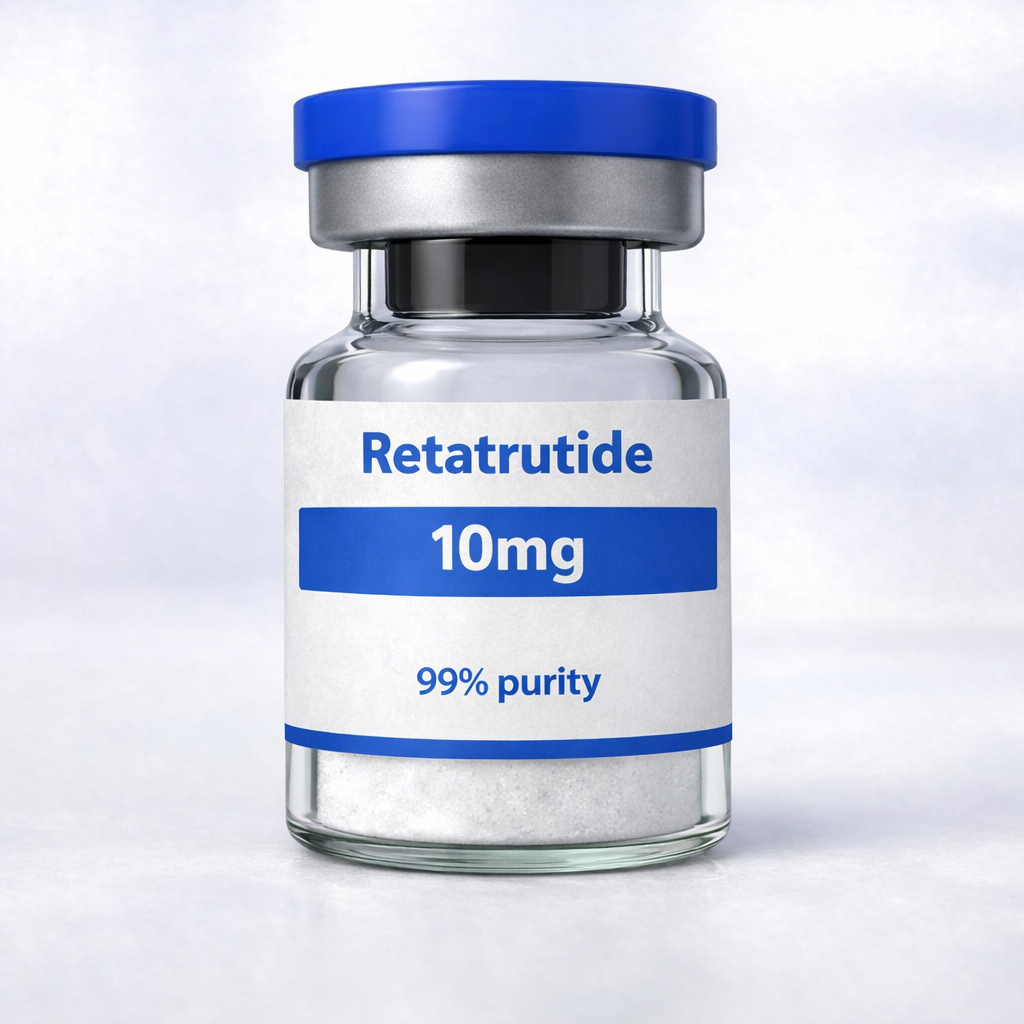

Retatrutide 10mg: The Triple-Agonist Breakthrough for Weight Loss & Metabolic Health
In the rapidly evolving landscape of metabolic medicine, Retatrutide 10mg stands at the forefront of innovation. As the first triple-hormone receptor agonist, Retatrutide uniquely targets three natural pathways: GIP (glucose-dependent insulinotropic polypeptide), GLP-1 (glucagon-like peptide-1), and glucagon. This groundbreaking mechanism sets it apart from semaglutide, which targets only GLP-1, and tirzepatide, which targets two receptors. The 10mg dose represents a key maintenance strength that delivers substantial metabolic benefits while following a structured titration protocol. This comprehensive guide explores everything you need to know about Retatrutide 10mg—from its unique mechanism and expected results to proper dosing, safety considerations, and how it compares to existing therapies.
What Is Retatrutide 10mg?
Retatrutide (also known as LY3437943) is a once-weekly injectable medication currently in development by Eli Lilly and Company. Unlike any approved drug on the market, Retatrutide is a unimolecular triple agonist that activates three key metabolic receptors simultaneously: the GIP receptor, the GLP-1 receptor, and the glucagon receptor . This triple-action approach is designed to address multiple aspects of metabolic dysfunction at once.
The 10mg dose is considered a high maintenance strength in clinical trials. While not yet FDA-approved for commercial use, Retatrutide has shown remarkable results in phase 2 clinical studies, with phase 3 trials currently underway for obesity, type 2 diabetes, knee osteoarthritis, and obstructive sleep apnea .
What Makes Retatrutide 10mg Different? The Triple-Agonist Mechanism
To understand why Retatrutide 10mg is generating significant excitement, it helps to understand how each of the three receptors contributes to metabolic health.
GLP-1 (Glucagon-Like Peptide-1) works by enhancing insulin secretion in response to meals, slowing gastric emptying, and increasing satiety signals in the brain. This reduces appetite and food intake .
GIP (Glucose-Dependent Insulinotropic Polypeptide) complements GLP-1 by also enhancing glucose-dependent insulin secretion. Additionally, GIP plays a role in regulating lipid metabolism and further reducing food intake .
Glucagon is best known for raising blood sugar during hypoglycemia, but it has other important effects. It also reduces food intake, increases energy expenditure, delays gastric emptying, and improves lipid metabolism .
By activating all three receptors, Retatrutide 10mg offers a coordinated approach. It reduces calorie intake through appetite suppression while simultaneously increasing energy expenditure through glucagon-mediated effects. This dual-action mechanism—burning more calories while consuming fewer—creates a powerful environment for weight loss .
Importantly, Retatrutide shows differential potency across the three receptors. In laboratory studies, it is approximately 8.9 times more potent than natural GIP at the GIP receptor. It is about 2.5 times less potent than natural GLP-1 at the GLP-1 receptor, and about 2.9 times less potent than natural glucagon at the glucagon receptor . This balanced profile is designed to maximize therapeutic benefits while minimizing unwanted side effects.
Expected Results at the Retatrutide 10mg Dose
Clinical trial data for Retatrutide is impressive, particularly regarding weight loss. In a phase 2 obesity trial involving adults without diabetes, participants receiving Retatrutide experienced dose-dependent weight reduction. After 24 weeks, the 8mg dose produced an average weight loss of 17.3 percent, while the 12mg dose achieved 17.5 percent. After 48 weeks, results improved further: the 8mg dose led to 22.8 percent weight loss, and the 12mg dose led to 24.2 percent .
For the 10mg dose, which sits between 8mg and 12mg in clinical testing, results are expected to be similarly robust. A large network meta-analysis published in 2024 confirmed that Retatrutide 12mg and 8mg were the two most effective treatments for reducing body weight and waist circumference among all GLP-1 receptor agonists and polyagonists studied. Retatrutide 12mg produced an average weight loss of 22.10 percent, while 8mg produced 20.70 percent .
For individuals with type 2 diabetes, Retatrutide also delivers meaningful improvements in blood sugar control. In a 36-week phase 2 study, participants receiving 8mg and 12mg maintenance doses achieved substantial HbA1c reductions, with the highest doses producing reductions of approximately 2.1 percentage points .
Proper Titration to Reach Retatrutide 10mg
Reaching the Retatrutide 10mg dose requires a structured approach. Clinical protocols follow a stepwise titration schedule over approximately 16 weeks. This gradual escalation allows the body to adapt to triple-receptor activation while minimizing gastrointestinal side effects .
A typical titration schedule begins at 0.5 mg weekly for the first four weeks. The dose then increases to 2 mg weekly for weeks five through eight. Weeks nine through twelve bring the dose to 4 mg weekly. Finally, weeks thirteen through sixteen advance to 8 mg or higher. The 10mg dose would be reached after confirming tolerability at 8mg .
Each dose is self-administered via a prefilled pen as a subcutaneous injection into the abdomen, thigh, or upper arm. Injection sites should be rotated to prevent skin reactions. The medication requires refrigeration until first use, after which it may be kept at room temperature for up to 28 days .
It is critical to never start at the 10mg dose. Skipping the titration protocol can lead to severe nausea, vomiting, and other serious gastrointestinal events. Always follow your prescribing physician’s specific dosing instructions.
Side Effects and Safety Profile of Retatrutide 10mg
As with all GLP-1 class medications, Retatrutide 10mg can cause side effects, particularly during the initial weeks of treatment or after dose increases. The most common adverse effects are gastrointestinal in nature and include nausea, diarrhea, decreased appetite, vomiting, constipation, indigestion, and abdominal pain .
The official prescribing information for Retatrutide includes several important warnings. Acute pancreatitis has been reported with GLP-1 receptor agonists. If severe or persistent abdominal pain occurs, with or without vomiting, patients should stop using Retatrutide and contact their healthcare provider immediately. Serious hypersensitivity reactions, including anaphylaxis, have also been reported. Patients should seek medical attention if they develop rash, swelling, or difficulty breathing. Gallbladder disease, including gallstones, has occurred and requires prompt evaluation if suspected .
Hypoglycemia warning: Retatrutide may further lower blood glucose levels. It is contraindicated in individuals with baseline hypoglycemia or conditions predisposing to hypoglycemia. Caution is especially important when Retatrutide is used with insulin or sulfonylureas, as this combination increases hypoglycemia risk. Blood glucose should be closely monitored, and doses of other antidiabetic drugs may need adjustment .
Retatrutide has not been studied in patients with severe gastrointestinal disorders, and its use is not recommended in this population. It should also not be used during pregnancy or breastfeeding, or in children .
Who May Benefit from Retatrutide 10mg?
Based on clinical trial data, ideal candidates for Retatrutide therapy include adults with obesity, defined as a BMI of 30 or higher, or those with a BMI of 27 or higher who have at least one weight-related medical condition such as hypertension, sleep apnea, or type 2 diabetes .
The meta-analysis also identified that patients without type 2 diabetes, those with higher baseline BMI, and individuals undergoing longer treatment cycles demonstrated significantly greater weight loss. This suggests that Retatrutide may be particularly beneficial for patients with obesity who do not have diabetes .
Drug Interactions and Precautions
Before starting Retatrutide 10mg, patients should inform their healthcare provider about all medications they take. Important interactions to consider include other antidiabetic medications, as combining Retatrutide with insulin or sulfonylureas may increase hypoglycemia risk. Drugs affecting gastrointestinal motility may have altered absorption when taken with Retatrutide due to its gastric slowing effects. Caution is also advised with cardiovascular medications such as statins, digoxin, or warfarin, as absorption or metabolism may be affected .
Final Verdict
Retatrutide 10mg represents the next frontier in metabolic medicine. As the first triple-agonist of its kind, it offers a unique mechanism that reduces calorie intake while potentially maintaining energy expenditure—addressing two sides of the weight loss equation. Clinical data shows superior weight loss results compared to existing dual and single agonists, with phase 2 trials demonstrating up to 24 percent body weight reduction at higher doses over 48 weeks.
However, Retatrutide remains an investigational medication not yet approved for commercial use. It requires careful medical supervision, proper titration, and attention to potential side effects, particularly gastrointestinal issues. The 10mg dose is a high maintenance strength intended for patients who have successfully titrated through lower doses and require robust metabolic intervention.
If you are interested in Retatrutide 10mg, speak with an endocrinologist or obesity medicine specialist about clinical trial opportunities. As phase 3 studies continue, this triple agonist may soon become a powerful new option for patients seeking transformative weight loss and metabolic health improvement.
Why Choose 10mg?
The 10mg format is ideal for those looking to start slow or maintain precise control, offering effective support without jumping to higher concentrations.
Perfect for entry-level use, gradual progression, or maintaining results.
Product Highlights
- ✔ 10mg peptide concentration
- ✔ Multi-pathway (triple-action) peptide
- ✔ High-quality, reliable formulation
- ✔ Designed for flexible, structured use
Important Note
For best results, combine with a balanced diet and regular physical activity. Responsible use and professional guidance are recommended.


Reviews
There are no reviews yet.